Μια μέθοδος συλλήψεως, αντισυλλήψεως, επιλογής φύλου και ωορρηξίας ήτο γνωστή στην αρχαιότητα και με αυτήν ο Ιωνάς (Eugenio Johan ), ο οποίος εφαρμόζει στα περισσότερα μαιευτήρια της Τσεχίας (τότε Τσεχοσλοβακίας) από το 1965, έχει ποσοστό 90% επιτυχία στη σύλληψη και 87% στην επιλογή φύλου. Ο ίδιος δε, επιβεβαιώνει ότι έχει βασιστεί επάνω σε αρχαία ελληνικά συγγράμματα, και δη αρχαίων ελληνικών εορτών.
Μέσα στους Μύθους, τις Παραδόσεις, τις
αφηγήσεις, αλλά και τις θρησκείες των Αρχαίων Πολιτισμών, υπάρχουν αναφορές για
την επίσκεψη εξωγήινων οντοτήτων στη Γη. Δεν αναφέρονται αεροσκάφη, ούτε υψηλή
Η ηλεκτρική ενέργεια που λαμβάνεται από τον αέρα οδηγεί το αυτοκίνητο"
Αυτό είναι ένα ηλεκτρικό αυτοκίνητο Pierce-Arrow του Νίκολα Τέσλα από το 1921 που λειτουργεί με καθαρό αιθερικό ηλεκτρισμό.
“ΑΝΤΑΡΚΤΙΚΗ” Απίστευτες φωτογραφίες που αποχαρακτηρίστηκαν.
Φωτογραφίες από το αρχείο του καπετάνιου Ρόμπερτ Σκοτ, 1912. Ο διάσημος
πολικός εξερευνητής, ένας από τους πρωτοπόρους στην ανακάλυψη του Νότιου
Πόλου, καπετάνιος του Βασιλικού Ναυτικού της Μεγάλης Βρεττανίας, ο
Ρόμπερτ Φάλκον Σκοτ.
Μέσα στους Μύθους, τις Παραδόσεις, τις
αφηγήσεις, αλλά και τις θρησκείες των Αρχαίων Πολιτισμών, υπάρχουν αναφορές για
την επίσκεψη εξωγήινων οντοτήτων στη Γη. Δεν αναφέρονται αεροσκάφη, ούτε υψηλή
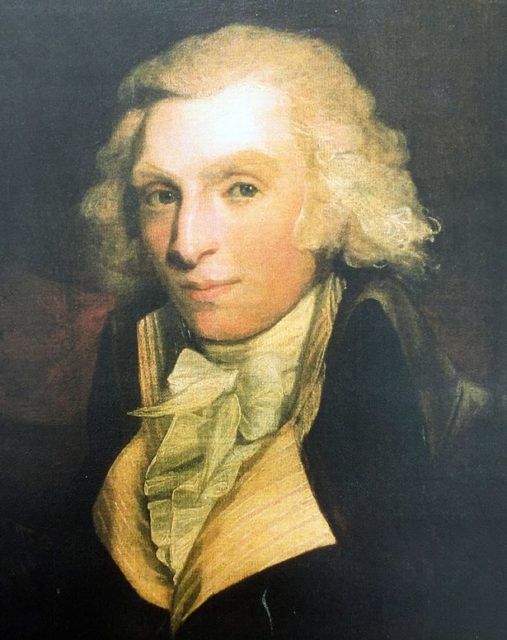
While Wallace is certainly one of the best-known people to be hanged, drawn, and quartered, Edward Marcus Despard
also has a notable claim. He was the last person to officially die in
this manner in the UK. Serving as an officer in the British Army,
Despard was appointed superintendent of the Bay of Honduras in 1783. He
made himself a target of the monarchy while stationed there for
advocating racial equality – an act which saw him briefly locked up in
London.
Although being hanged, drawn, and quartered was popularized during
the reign of King Edward III in the mid-1300s, it was also recorded as a
form of punishment in earlier years. One of the first official instances
was recorded by English chronicler Matthew Paris in 1238. He wrote
about one of the men at arms trying to kill King Henry III, only for the
monarch to enact a brutal punishment when he failed.
There was certainly no shortage of creative punishments in the middle ages. The judas cradle
made a person sit on a sharp wooden point, the pear of anguish forcibly
stretched bodily orifices, and the iron maiden impaled living victims
with metal spikes. One particular punishment – being hanged, drawn, and
quartered – was reserved only for those accused of treason.
Hanged, drawn, and quartered
Those convicted of high treason were subject to
a brutal, humiliating, and painful execution. Various sources list the
order of punishment differently, but each person was subject to all
three brutal stages. Hanging was not always meant to kill the accused,
but rather to bring them to a point just before death when they would
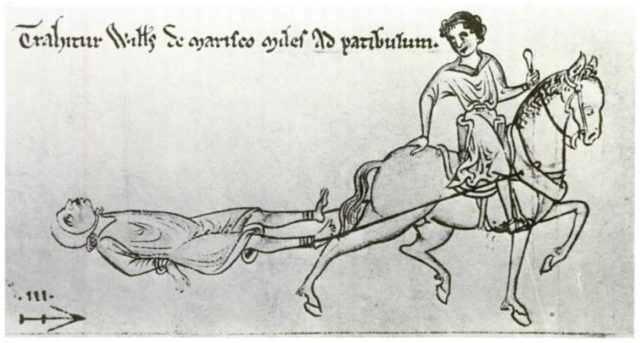
then be cut down. Drawing involved attaching the person to a wooden
panel or frame which was tied behind a horse and dragged through the
streets.
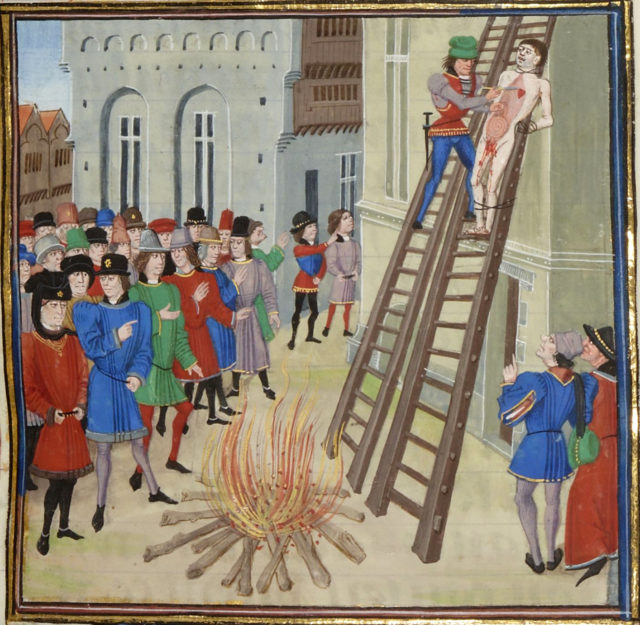
Illustration
of the execution of Hugh the Younger Despenser who was hanged, drawn,
and quartered, c. 1470. (Photo Credit: Loyset Liédet/ Wikimedia Commons/
Public Domain)
Some sources indicate that another meaning of ‘drawn’ was
occasionally implemented instead of, or in addition to, being pulled by a
horse. This was the removal of the individual’s intestines from their
body. The accused would have their genitals removed and burned in front
of them, sometimes along with their guts, before their head was finally
lopped off. They would then be quartered – literally divided into four quarters.
It can always get worse
Following death, the victim’s body parts would be boiled
in a vat of spiced water designed to preserve the flesh. They would
then be publicly displayed as a warning to others who might think about
conspiring against the crown. Although this was the standard way of
being hanged, drawn, and quartered, the process could be made both
better or worse for the victim. It largely depended on how the king was
feeling.
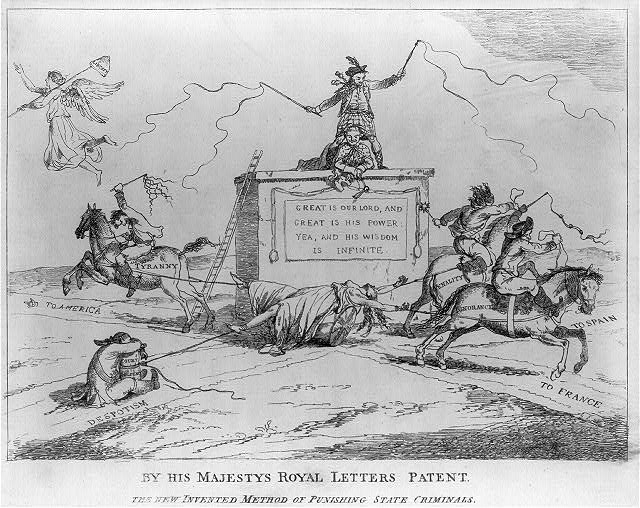
Print
showing Britannia drawn and quartered at a crossroad by ropes attached
to three horses: Tyranny, Venality, and Ignorance, c. 1780. (Photo
Credit: British Cartoon Prints Collection/ Library of Congress/
Wikimedia Commons/ Public Domain)
If the person was allowed to die by hanging before the other parts of
the punishment were carried out, then they got off easy. If the king
was feeling particularly nasty, however, he could order the quartering
to happen while the accused was still alive. To do this, each of their
limbs were attached to a horse by rope and the animals were made to walk
away in different directions, slowly ripping the person apart.
https://seliniartemisekati.blogspot.com/ - Επιτρέπεται η
αναδημοσίευση του περιεχομένου της ιστοσελίδας εφόσον αναφέρεται ευκρινώς η
πηγή του και υπάρχει ενεργός σύνδεσμος (link). Νόμος 2121/1993 και κανόνες
Διεθνούς Δικαίου που ισχύουν στην Ελλάδα.
ΕΠΙΣΗΜΑΝΣΗ
Ορισμένα αναρτώμενα
από το διαδίκτυο κείμενα ή εικόνες (με σχετική σημείωση της πηγής), θεωρούμε
ότι είναι δημόσια. Αν υπάρχουν δικαιώματα συγγραφέων, παρακαλούμε ενημερώστε
μας για να τα αφαιρέσουμε. Επίσης σημειώνεται ότι οι απόψεις του ιστολογίου
μπορεί να μην συμπίπτουν με τα περιεχόμενα του άρθρου. Για τα άρθρα που
δημοσιεύονται εδώ, ουδεμία ευθύνη εκ του νόμου φέρουμε καθώς απηχούν
αποκλειστικά τις απόψεις των συντακτών τους και δεν δεσμεύουν καθ’ οιονδήποτε
τρόπο το ιστολόγιο.
Η ηλεκτρική ενέργεια που λαμβάνεται από τον αέρα οδηγεί το αυτοκίνητο"
Αυτό είναι ένα ηλεκτρικό αυτοκίνητο Pierce-Arrow του Νίκολα Τέσλα από το 1921 που λειτουργεί με καθαρό αιθερικό ηλεκτρισμό.
[τα σύμβολα των αρχαίων θεών και δη του Κρόνου έχουν σήμερα οι τεκτονικές στοές όπως φαίνεται και στην φωτογραφία] Ο Σαμάς, ο Άτουμ, ο Ήλιος, ο Κρόνος, ο Ρα, ο Αν, ο Όντιν, ο Γιαχβέ, ο Τριπτόλεμος, ο Κετζαλκοάτλ, ο Μολόχ, ο τροχός του Βούδα, ο Κολόμπ, ο πρώτος βασιλιάς, ο ετοιμοθάνατος ή εκτοπισμένος θεός, ο ακίνητος «Ήλιος», η ενότητα του «ουρανού», η «μεγάλη σύνοδος» της χρυσής εποχής, ο «κοσμικός τροχός ακίνητος στον πολικό βορρά» και πολλοί άλλοι θεοί συνδέονταν με τον Κρόνο.
While Wallace is certainly one of the best-known people to be hanged, drawn, and quartered, Edward Marcus Despard
also has a notable claim. He was the last person to officially die in
this manner in the UK. Serving as an officer in the British Army,
Despard was appointed superintendent of the Bay of Honduras in 1783. He
made himself a target of the monarchy while stationed there for
advocating racial equality – an act which saw him briefly locked up in
London.
Although being hanged, drawn, and quartered was popularized during
the reign of King Edward III in the mid-1300s, it was also recorded as a
form of punishment in earlier years. One of the first official instances
was recorded by English chronicler Matthew Paris in 1238. He wrote
about one of the men at arms trying to kill King Henry III, only for the
monarch to enact a brutal punishment when he failed.
There was certainly no shortage of creative punishments in the middle ages. The judas cradle
made a person sit on a sharp wooden point, the pear of anguish forcibly
stretched bodily orifices, and the iron maiden impaled living victims
with metal spikes. One particular punishment – being hanged, drawn, and
quartered – was reserved only for those accused of treason.
Hanged, drawn, and quartered
Those convicted of high treason were subject to
a brutal, humiliating, and painful execution. Various sources list the
order of punishment differently, but each person was subject to all
three brutal stages. Hanging was not always meant to kill the accused,
but rather to bring them to a point just before death when they would
then be cut down. Drawing involved attaching the person to a wooden
panel or frame which was tied behind a horse and dragged through the
streets.
Illustration
of the execution of Hugh the Younger Despenser who was hanged, drawn,
and quartered, c. 1470. (Photo Credit: Loyset Liédet/ Wikimedia Commons/
Public Domain)
Some sources indicate that another meaning of ‘drawn’ was
occasionally implemented instead of, or in addition to, being pulled by a
horse. This was the removal of the individual’s intestines from their
body. The accused would have their genitals removed and burned in front
of them, sometimes along with their guts, before their head was finally
lopped off. They would then be quartered – literally divided into four quarters.
It can always get worse
Following death, the victim’s body parts would be boiled
in a vat of spiced water designed to preserve the flesh. They would
then be publicly displayed as a warning to others who might think about
conspiring against the crown. Although this was the standard way of
being hanged, drawn, and quartered, the process could be made both
better or worse for the victim. It largely depended on how the king was
feeling.
Print
showing Britannia drawn and quartered at a crossroad by ropes attached
to three horses: Tyranny, Venality, and Ignorance, c. 1780. (Photo
Credit: British Cartoon Prints Collection/ Library of Congress/
Wikimedia Commons/ Public Domain)
If the person was allowed to die by hanging before the other parts of
the punishment were carried out, then they got off easy. If the king
was feeling particularly nasty, however, he could order the quartering
to happen while the accused was still alive. To do this, each of their
limbs were attached to a horse by rope and the animals were made to walk
away in different directions, slowly ripping the person apart.
https://seliniartemisekati.blogspot.com/ - Επιτρέπεται η
αναδημοσίευση του περιεχομένου της ιστοσελίδας εφόσον αναφέρεται ευκρινώς η
πηγή του και υπάρχει ενεργός σύνδεσμος (link). Νόμος 2121/1993 και κανόνες
Διεθνούς Δικαίου που ισχύουν στην Ελλάδα.
ΕΠΙΣΗΜΑΝΣΗ
Ορισμένα αναρτώμενα
από το διαδίκτυο κείμενα ή εικόνες (με σχετική σημείωση της πηγής), θεωρούμε
ότι είναι δημόσια. Αν υπάρχουν δικαιώματα συγγραφέων, παρακαλούμε ενημερώστε
μας για να τα αφαιρέσουμε. Επίσης σημειώνεται ότι οι απόψεις του ιστολογίου
μπορεί να μην συμπίπτουν με τα περιεχόμενα του άρθρου. Για τα άρθρα που
δημοσιεύονται εδώ, ουδεμία ευθύνη εκ του νόμου φέρουμε καθώς απηχούν
αποκλειστικά τις απόψεις των συντακτών τους και δεν δεσμεύουν καθ’ οιονδήποτε
τρόπο το ιστολόγιο.
Although being hanged, drawn, and quartered was popularized during
the reign of King Edward III in the mid-1300s, it was also recorded as a
form of punishment in earlier years. One of the first official instances
was recorded by English chronicler Matthew Paris in 1238. He wrote
about one of the men at arms trying to kill King Henry III, only for the
monarch to enact a brutal punishment when he failed.
Η ηλεκτρική ενέργεια που λαμβάνεται από τον αέρα οδηγεί το αυτοκίνητο"
Αυτό είναι ένα ηλεκτρικό αυτοκίνητο Pierce-Arrow του Νίκολα Τέσλα από το 1921 που λειτουργεί με καθαρό αιθερικό ηλεκτρισμό.
Μέσα στους Μύθους, τις Παραδόσεις, τις
αφηγήσεις, αλλά και τις θρησκείες των Αρχαίων Πολιτισμών, υπάρχουν αναφορές για
την επίσκεψη εξωγήινων οντοτήτων στη Γη. Δεν αναφέρονται αεροσκάφη, ούτε υψηλή
“ΑΝΤΑΡΚΤΙΚΗ” Απίστευτες φωτογραφίες που αποχαρακτηρίστηκαν.
Φωτογραφίες από το αρχείο του καπετάνιου Ρόμπερτ Σκοτ, 1912. Ο διάσημος
πολικός εξερευνητής, ένας από τους πρωτοπόρους στην ανακάλυψη του Νότιου
Πόλου, καπετάνιος του Βασιλικού Ναυτικού της Μεγάλης Βρεττανίας, ο
Ρόμπερτ Φάλκον Σκοτ.
While Wallace is certainly one of the best-known people to be hanged, drawn, and quartered, Edward Marcus Despard
also has a notable claim. He was the last person to officially die in
this manner in the UK. Serving as an officer in the British Army,
Despard was appointed superintendent of the Bay of Honduras in 1783. He
made himself a target of the monarchy while stationed there for
advocating racial equality – an act which saw him briefly locked up in
London.
Although being hanged, drawn, and quartered was popularized during
the reign of King Edward III in the mid-1300s, it was also recorded as a
form of punishment in earlier years. One of the first official instances
was recorded by English chronicler Matthew Paris in 1238. He wrote
about one of the men at arms trying to kill King Henry III, only for the
monarch to enact a brutal punishment when he failed.
There was certainly no shortage of creative punishments in the middle ages. The judas cradle
made a person sit on a sharp wooden point, the pear of anguish forcibly
stretched bodily orifices, and the iron maiden impaled living victims
with metal spikes. One particular punishment – being hanged, drawn, and
quartered – was reserved only for those accused of treason.
Hanged, drawn, and quartered
Those convicted of high treason were subject to
a brutal, humiliating, and painful execution. Various sources list the
order of punishment differently, but each person was subject to all
three brutal stages. Hanging was not always meant to kill the accused,
but rather to bring them to a point just before death when they would
then be cut down. Drawing involved attaching the person to a wooden
panel or frame which was tied behind a horse and dragged through the
streets.
Illustration
of the execution of Hugh the Younger Despenser who was hanged, drawn,
and quartered, c. 1470. (Photo Credit: Loyset Liédet/ Wikimedia Commons/
Public Domain)
Some sources indicate that another meaning of ‘drawn’ was
occasionally implemented instead of, or in addition to, being pulled by a
horse. This was the removal of the individual’s intestines from their
body. The accused would have their genitals removed and burned in front
of them, sometimes along with their guts, before their head was finally
lopped off. They would then be quartered – literally divided into four quarters.
It can always get worse
Following death, the victim’s body parts would be boiled
in a vat of spiced water designed to preserve the flesh. They would
then be publicly displayed as a warning to others who might think about
conspiring against the crown. Although this was the standard way of
being hanged, drawn, and quartered, the process could be made both
better or worse for the victim. It largely depended on how the king was
feeling.
Print
showing Britannia drawn and quartered at a crossroad by ropes attached
to three horses: Tyranny, Venality, and Ignorance, c. 1780. (Photo
Credit: British Cartoon Prints Collection/ Library of Congress/
Wikimedia Commons/ Public Domain)
If the person was allowed to die by hanging before the other parts of
the punishment were carried out, then they got off easy. If the king
was feeling particularly nasty, however, he could order the quartering
to happen while the accused was still alive. To do this, each of their
limbs were attached to a horse by rope and the animals were made to walk
away in different directions, slowly ripping the person apart.
https://seliniartemisekati.blogspot.com/ - Επιτρέπεται η
αναδημοσίευση του περιεχομένου της ιστοσελίδας εφόσον αναφέρεται ευκρινώς η
πηγή του και υπάρχει ενεργός σύνδεσμος (link). Νόμος 2121/1993 και κανόνες
Διεθνούς Δικαίου που ισχύουν στην Ελλάδα.
ΕΠΙΣΗΜΑΝΣΗ
Ορισμένα αναρτώμενα
από το διαδίκτυο κείμενα ή εικόνες (με σχετική σημείωση της πηγής), θεωρούμε
ότι είναι δημόσια. Αν υπάρχουν δικαιώματα συγγραφέων, παρακαλούμε ενημερώστε
μας για να τα αφαιρέσουμε. Επίσης σημειώνεται ότι οι απόψεις του ιστολογίου
μπορεί να μην συμπίπτουν με τα περιεχόμενα του άρθρου. Για τα άρθρα που
δημοσιεύονται εδώ, ουδεμία ευθύνη εκ του νόμου φέρουμε καθώς απηχούν
αποκλειστικά τις απόψεις των συντακτών τους και δεν δεσμεύουν καθ’ οιονδήποτε
τρόπο το ιστολόγιο.
Έτσι μοιάζει η Ανταρκτική μέσα από τα μάτια μιας αγνοούμενης ερευνητικής ομάδας
Ο συγγραφέας έχει μεταφέρει ολόκληρο το μοναδικό αρχείο στο κανάλι του στο Telegram.